
Cargo Insurance 2026: Complete Guide to Coverage, Cost, Types & Claims
If you are shipping goods across borders, you may need to purchase cargo insurance. Without Cargo Insurance, you may have to absorb the full cost when something goes wrong during transport. This guide explains what Cargo Insurance is, what it covers, how much it costs, and how to get the right protection for your shipments.
What Is Cargo Insurance?
Cargo insurance is a financial protection for goods during transport. It covers loss, damage, or theft while goods move from one place to another.
It is widely used in global logistics, especially in international cargo insurance, where goods face more risks such as long transit times, multiple handling points, and cross-border regulations. Whether shipping by sea, air, truck, or road, freight cargo insurance reduces financial risk when unexpected events happen during transport.
Why Cargo Insurance Is Important in International Shipping?
Cargo insurance is important in international shipping because goods face multiple risks once they enter global transport chains. From pickup to final delivery, shipments go through many handlers and checkpoints. At each stage, international cargo insurance helps reduce financial exposure when unexpected problems happen.
Here are the main reasons why it plays such an important role in international trade:
1. Prevents Direct Financial Loss
Without freight cargo insurance, cargo costs are fully borne by the shipper or buyer. For most businesses, the freight cargo insurance cost is small compared to the potential loss of one shipment, so this makes it a practical risk control tool.
2. Covers Unpredictable Shipping Risks
International shipping involves risks that cannot be fully controlled. Such as weather issues, transport accidents, and more, can happen at any time across sea or air routes. This applies to both sea freight insurance and air cargo insurance.
Cargo insurance does not prevent these events, but it ensures the financial impact is reduced when they occur.
3. Protects Cash Flow Stability
Cargo insurance can help your businesses avoid sudden financial pressure from shipment loss. Instead of absorbing full costs, companies can rely on compensation to recover faster. This is especially useful for small and medium exporters who depend on stable cargo insurance coverage to maintain operations without disruption.
4. Builds Trust in Global Trade
Cargo insurance increases trust between buyers and sellers in international transactions. When goods are insured, buyers feel more secure that their shipments are protected during long-distance transport.
In many cases, international cargo insurance is expected as a standard practice in B2B trade and cross-border shipping.
What Is Cargo Insurance Coverage?
In most case, cargo insurance only responds to unexpected physical events that directly affect the condition or existence of your goods.
To make it easier to understand, here is a clear breakdown of what it usually covers:
| Coverage Area | Typical Risks Covered |
|---|---|
| Physical Damage | Dropping, crushing, and poor handling |
| Total / Partial Loss | Theft, missing cargo, container loss |
| Weather Damage | Storms, floods, heavy rain (marine routes) |
| Transport Accidents | Truck crash, warehouse damage, loading errors |
| Storage & Transit Risks | Port handling, temporary storage issues |
Most standard freight insurance plans follow similar protection rules in international shipping. You can use the information above as a general reference when understanding typical coverage structures.
Types of Cargo Insurance
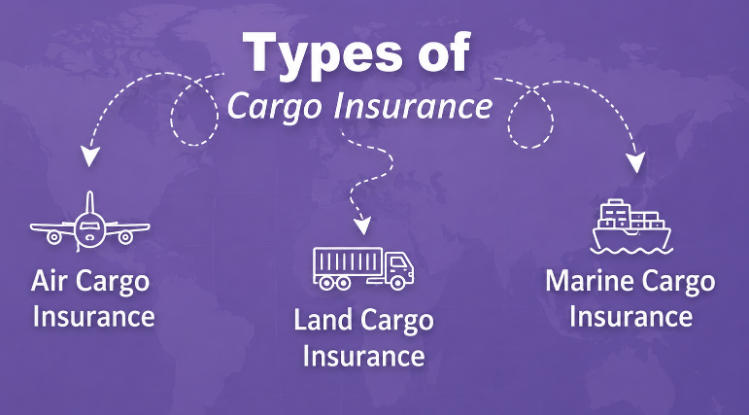
Types of cargo insurance depend on transport mode and level of protection. In international logistics, different routes carry different risks. Below is a clear and detailed breakdown of the main types used in global trade.
| Type | Best Use Case | Transport Mode | Key Risks Covered | Cost Level |
|---|---|---|---|---|
| Marine Cargo Insurance | Bulk goods, containers, long-distance trade | Sea freight | Storm damage, container loss, sinking, water damage, piracy | Medium |
| Air Cargo Insurance | High-value or urgent shipments | Air freight | Handling damage, crash accidents, theft, and delay-related damage | Medium–High |
| Land Cargo Insurance | Regional or cross-border trucking | Road / Rail | Road accidents, theft, loading/unloading damage | Low–Medium |
| All-Risk Cargo Insurance | High-value or sensitive goods | Sea / Air / Land | Wide coverage: damage, theft, accidents, weather events | High |
| Named Perils Insurance | Cost-sensitive shipments | Sea / Air / Land | Fire, sinking, collision, theft (only if listed) | Low |
In global logistics, choosing the right type of cargo insurance directly affects risk control and shipping cost. Many businesses combine different freight cargo insurance options to balance protection level and cargo insurance cost efficiency.
How Does Cargo Insurance Work?
Cargo Insurance works through a simple process that starts before shipment and only becomes active once goods are in transit.
Let’s break it down into simple steps:
Step 1: Buyer Provides Shipment Details
You need to submit basic shipment information to get a quote for cargo insurance. This usually includes cargo value, product type, destination, transport mode, and shipping route.
Step 2: Insurance Is Calculated & Purchased
After reviewing the shipment data, the insurer or freight partner calculates the premium and issues a policy offer. Once you confirm and pay, the insurance contract is officially activated.
Step 3: Coverage Starts When Goods Are Shipped
The policy becomes active once the shipment is handed over to the carrier or leaves the origin point. From this moment, the insured value is protected during transit across different transport stages, whether under sea freight insurance or air cargo insurance.
Step 4: If Damage or Loss Happens → Claim Process
If an incident occurs, you submit a claim with basic shipping and insurance documents. The insurer then reviews the case and checks whether it meets the conditions under the cargo insurance coverage agreement before making a decision.
Step 5: Compensation Based on Insured Value
Once approved, compensation is paid according to the insured value stated in the policy.
How Much Does Cargo Insurance Cost?
There is no fixed price for cargo insurance. In most cases, insurers calculate freight insurance costs based on the insured value, transport risk, and policy type. This means the final premium will change depending on your shipment details, cargo type, and shipping route.
To understand how the price is formed, let’s look at a simple calculation method.
Formula: Insurance Premium = Insured Value × Rate
Example of Cargo Insurance Cost Calculation
If your commercial invoice value is $50,000, and the insurance rate is 0.5%, with a $10 minimum charge, the calculation works like this:
Insurance Premium = $50,000 × 0.5% = $250
Then, you should compare it ($250) with the minimum charge. In this case, the minimum is only $10, so it does not affect the result because $250 is already higher. So the final cargo insurance cost is $250 for this shipment.
Lower Cost with Logistics Support
International cargo insurance costs can be lower if you buy it through a logistics provider, such as DFH Freight. They will negotiate bulk rates with insurers, which helps reduce the final premium for customers using international cargo insurance.
For example, the original cost was $250, but if you purchase insurance directly from the freight forwarder, you might only need to pay $180.
How to Get Cargo Insurance?
You can get cargo insurance through insurance companies, freight forwarders, or online insurance platforms. The best option depends on your shipping frequency, cargo type, and how much support you need during the insurance process.
1. Freight Forwarders / Logistics Providers
Freight forwarders are one of the most convenient ways to arrange cargo insurance because shipping and insurance can be handled together. This option is especially useful for businesses that need support with transportation, customs, and cargo protection.
Typical Example: DFH Freight
DFH Freight is an international freight forwarder that provides shipping solutions from China to global destinations. Besides transportation services, DFH Freight helps customers arrange international cargo insurance to protect goods during international shipping.

Advantages:
- Insurance can be arranged together with freight services
- One partner manages shipping and cargo protection
- Professional support with cargo risks and claims
- More affordable insurance premiums through long-term partnerships with insurance companies
Best for:
Importers, exporters, Amazon sellers, and cross-border businesses need a simple shipping solution with cargo protection.
2. Insurance Companies
Traditional insurance companies provide a direct way to purchase cargo insurance. They usually offer different policy options based on cargo value, shipping routes, and coverage requirements.
Typical Example: AIG
AIG is one of the world’s leading commercial insurance providers. It offers various insurance solutions for businesses involved in international trade, transportation, and risk management.

Advantages:
- Direct access to professional insurance products
- Flexible coverage options for different cargo risks
- Suitable for companies with their own logistics teams
Best for:
Businesses that manage their own shipping process and need direct control over insurance policies.
3. Online Insurance Platforms
Online insurance platforms provide a faster way to compare and purchase cargo insurance. They allow you to get quotes online without contacting traditional insurance providers directly.
Typical Example: Cover Genius
Cover Genius is a digital insurance platform that helps businesses provide and manage insurance products through online solutions.

Advantages:
- Fast online quotes
- Simple digital application process
- Convenient for smaller shipments
Best for:
Small businesses and occasional shippers who need quick and simple insurance solutions.
For businesses shipping internationally, working with a freight forwarder is often the easiest option because transportation and insurance can be managed together. This reduces paperwork, saves time, and provides better support when shipping risks occur.
Common Exclusions You Should Know
Cargo insurance does not cover every risk in international shipping, even if you have full international cargo insurance. Policies always include exclusions that define what is not protected.
The most common exclusions include the following:
1. Packaging Problems and Poor Preparation
If goods are not properly packed for long-distance transport, insurers usually will not cover the loss, including weak cartons, missing protection for fragile items, or incorrect labeling that causes handling damage.
In most cases, you are responsible for ensuring proper packaging, otherwise the claim may be rejected under cargo insurance coverage.

2. Delay and Delivery Time Loss
Cargo insurance does not cover losses caused by shipping delays, even if the delay comes from port congestion, weather, or customs checks. In both sea freight insurance and air cargo insurance, only physical damage or loss is covered, so you cannot expect compensation for late delivery.
3. Natural Wear and Product Condition
Normal wear, aging, or natural deterioration is excluded from most policies because cargo insurance only protects against sudden accidents, not predictable product changes during transit.
For items like food or temperature-sensitive goods, you need separate protection planning, as these losses are not covered.
4. War, Political Risks, and Special Events
High-risk events such as war, strikes, or political instability are generally not included in standard cargo insurance and usually require extra coverage. In marine cargo insurance, these exclusions are common, so you may need additional protection if your shipping route involves unstable regions.
5. Illegal or Misdeclared Goods
Cargo insurance will not cover shipments that are illegal or incorrectly declared, and claims will be rejected if the cargo details do not match the actual goods. This applies to all international freight insurance policies, so you must ensure all shipment information is accurate before shipping.
Knowing what is not covered can help your business reduce disputes, improve packaging standards, and choose the right freight insurance plan based on real operational risk rather than assumptions.
FAQs About Cargo Insurance
What Is the Difference Between Cargo Insurance and Freight Insurance?
Cargo insurance mainly refers to protection for the goods themselves, covering physical loss or damage during transport. Freight insurance is often used in a broader sense and may include shipping-related risks depending on the provider. In practice, both terms are used interchangeably in international cargo insurance, but coverage details always depend on the policy.
Is Cargo Insurance Mandatory in International Shipping?
Cargo insurance is not legally required in most international trade transactions, but many businesses still use it to reduce financial risk, especially for high-value shipments. Freight cargo insurance is often requested by buyers or included as part of shipping agreements to ensure safer trade.
Who Pays for Cargo Insurance?
Cargo insurance is usually paid by the party that wants to protect the goods, most often the buyer or shipper. In international trade, it depends on the agreed trade terms (such as Incoterms). If the buyer wants full protection during transit, they will typically purchase and pay for the cargo insurance themselves. In some cases, sellers or logistics providers may arrange it as part of the shipping service, but the cost is still included in the overall shipment expenses.
Does Cargo Insurance Cover Partial Damage or Only Total Loss?
Most cargo insurance coverage includes both partial and total loss, depending on the policy type. If goods are damaged but not completely lost, you can still make a claim based on the insured value of the affected items. However, compensation rules may vary between providers.
Can I Buy Cargo Insurance after the Shipment Has Already Started?
In most cases, cargo insurance must be purchased before or at the time of shipment dispatch. Once goods are already in transit, many insurers will not accept new coverage because the risk has already begun. This applies to most marine cargo insurance and air cargo insurance policies.
What Affects Cargo Insurance Cost the Most?
The main factors that influence cargo insurance cost are cargo value, transport method, shipping route, and product type. High-value or fragile goods usually require higher premiums, while safer routes or standard goods generally cost less to insure under international freight cargo insurance.
What Is the Difference Between Cargo Insurance and Cargo Liability Insurance?
Cargo insurance protects your goods, and cargo liability insurance only covers the carrier’s legal responsibility. If your cargo is lost or damaged, cargo insurance pays based on the insured value, but liability insurance only offers limited compensation and only applies if the carrier is proven at fault.
Final Thoughts
Choosing the right Cargo Insurance is not only about protection, but also about efficiency and cost control in global shipping. Many businesses simplify the process by working with a freight partner that combines shipping and insurance in one workflow.
For example, DFH Freight integrates international transportation and cargo insurance arrangements, helping businesses reduce operational steps, improve coordination, and access more competitive insurance pricing through established insurer partnerships.
