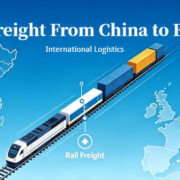
Air Freight vs Sea Freight to Singapore: Cost & Time Comparison
When importing from China to Singapore,Choosing the shipping methods depends on your cargo type, business type, quantity and priority. If you are shipping from China to Singapore but choose the worry way, it will increase your shipping cost and ruin the whole supply chain.
I’m not exaggerating. When you balance the cost and transit time between air and sea freight, here are more factors you need to consider. In this article, I will give a full guide to help you decide the most suitable shipping method for all of your shipments from China to Singapore.
Air Freight vs Sea Freight Quick Comparison
| Item | Air Freight | Sea Freight |
|---|---|---|
| Calculation Method | Chargeable Weight(KG) | Charged by CBM / FCL |
| Base Freight Cost | High | Low ✅️ |
| Minimum Shipment Cost | Low (from 45kg)✅️ | High (from 1 CBM) |
| Small Shipment Cost | Relatively high | Not always low but affordable ✅️ |
| Large Shipment Cost | High | Cost-effective ✅️ |
| Destination Charges | Simple and low✅️ | Complex and high |
| Customs Clearance Cost | Stable ✅️ | Variable |
| Hidden Fees | Less ✅️ | More |
| Cost Transparency | High ✅️ | Medium |
| Cost Stability | Medium | Relatively stable✅️ |
Air Freight vs Sea Freight China to Singapore: Cost Comparison
Note: normally sea freight and air freight use different calculate methods, so shipping costs are calculated by different units. 1 CBM (cubic meter) ≈ 167 kg.
| Air Freight China to Singapore | Unit Price | Sea Freight China to Singapore | Unit Price |
|---|---|---|---|
| Chargeable Weight | USD/KG | CBM | USD/CBM |
| 11-30 KG | 4.48 USD/KG | 1 CBM | 119.40 USD/CBM |
| 31-100 KG | 3.73 USD/KG | 3-5 CBM | 116.42 USD/CBM |
| 101-500 KG | 3.36 USD/KG | 5–10 CBM | 111.94 USD/CBM |
| 501-1000 KG | 3.13 USD/KG | 10–15 CBM | 107.46 USD/CBM |
Above Quotation is for the real price on May of 2026,and for common goods. If your goods with famous brand, with batteries or irregular packages, please send more details to our DFH Logistics service to team to check then you can get the exactly price.
Air Freight vs Sea Freight China to Singapore:Transit Time Comparison
Air freight from China to Singapore 1-2days, Sea freight from China to Singapore 7-15days. Below welcome to have a check :
| Modes | Transit Time |
|---|---|
| Air Freight to Airport | 1-2 Days |
| Express Courier | 2-4 Days |
| Sea Freight FCL | 7-15 Days |
| Sea Freight LCL | 10-15 Days |
The exactly shipping time from China to Singapore also depends on many other factors such as the pick up address in china, delivery address in Singapore, the custom clearance process. So keep the customs documents correct and avoid ship in the ship peak season is very important thing for you to get your shipments faster and on time.
How to Calculate the Shipping Cost?

Air Freight costs from China to Singapore
First, we need to know what is Chargeable Weight. Chargeable Weight is the higher value between actual weight and volumetric weight, used to calculate air freight costs.
Chargeable Weight=Max(Gross Weight, Volumetric Weight)
Volumetric Weight (kg)=L×W×H(cm)/6000
*Note: 6000 is the standard air freight divisor. Some airlines use 5000 or 6000.
For example:
Cargo size: 50×40×30 cm 10 cartons
Gross weight: 8kg 10cartons/kg=80kg
Volumetric Weight = 50×40×30/6000 = 10kg 10=100kg
Volumetric Weight>Gross weight
Given the air freight unit price 3.73USD/kg, so the total cost is 100×3.73 = 373 USD.
Sea Freight Costs from China to Singapore
Sea freight is normally calculated by CBM.
CBM=L×W×H(cm)/1,000,000
FCL: Charged by container(40HQ/20GP)
LCL: Charged by CBM
For example(LCL):
Cargo size: 100×80×60 cm
1×0.8×0.6=0.48 CBM
Given the sea freight unit price 120USD/CBM, so the total cost is 0.48×120 = 57.6 USD.
Hidden Fees You Must Know for Difference Shipping Methods

Sometimes, freight cost breakdown are not fully listed for you clearly. Some freight forwarders provide very low price but there are many hidden fees. Read this article to get a reliable freight forwarder: Top 6 Freight Forwarder China to Singapore.
So you need to confirm what kinds of service included in their quotation. Understanding where your money goes can help you evaluate if this deal is truly worth it. Following are some hidden fees of air freight often brought up after your cargo has been picked up:
- Pickup
- Repacking & relabeling
- Warehousing
- Insurance
- FSC (Fuel Surcharge): depends on fuel price
- Security Surcharge
- War Risk Surcharge(parts of airline)
- Terminal Handling
- AWB Fee
- DGC
- Oversize/Overweight cargo fee
- Customs clearance fee
- Duties and taxes
- Packaging fee: if your packaging is not compliant.
Since sea freight surcharges are more variable, the range of applicable fees can be quite extensive. Of course, these surcharges only apply when the corresponding services are required.
- Pickup
- Repacking & relabeling
- Warehousing
- Insurance
- BAF(Bunker Adjustment Factor)
- EBS(Emergency Bunker Surcharge)
- PSS (Peak Season Surcharge): normally from July to November.
- GRI (General Rate Increase): mainly for South American and US routes.
- THC (Terminal Handling Charge): OTHC – Origin Terminal Handling Charge and DTHC – Destination Terminal Handling Charge.
- LSS (Low Sulfur Surcharge): to reduce the amount of sulfuric fuel emissions
- PCS (Port Congestion Surcharge)
- CIC (Container Imbalance Charge)
- DDC (Destination Delivery Charge)
- OWS (Overweight Surcharge)
- OLS (Over-length Surcharge)
- Demurrage
- Detention
- Customs clearance
- Duties and taxes
Cargo Suitability for Air Freight and Sea Freight
For some cargo types, it’s the common sense that they should be shipped by a certain method.
Best for Air Freight
- High value goods: electronics, pharmaceuticals, medical devices. Especially for these small volume items like jewelries, diamonds, arts and luxury goods.
- Time-sensitive goods: seasonal goods, emergency files
- Perishable and short-dated goods: flowers, seafood, fruits.
- Urgent replacement parts.
- Precision instruments and equipment: highly sensitive to environmental factors including vibration, humidity and temperature throughout transportation.
Best for Sea Freight
- Bulk commodity like raw materials, furniture, building materials.
- Quarterly inventory stocking.
- Not sensitive for transit time.
Capacity Limitation and Cargo Restrictions
Air Freight
- If the weight per piece exceeds 68KG or dimensions exceed 150×80×80CM, there will be additional fees.
- If any single side (length/width/height) exceeds 2 meters, or the weight per piece exceeds 1.5 tons, the destination port delivery fee must be confirmed separately.
- Restrictions: Dangerous goods, batteries, toxic goods, explosives and flammable materials, compressed gases, corrosive substances.
Sea Freight
Sea freight is not as strict as air freight for cargo size or weight, but there are some common standards and restrictions that mainly depends on container type and if your cargo is over-sized.
- Standard limitations: 20GP, 40GP, 20HC, 40HC.
- Restrictions: Flammable and explosive goods,radioactive materials, weapons and military items, living animals, counterfeit goods.
For shipping from China to Singapore, prohibited and restricted items you need to specifically pay attention to: chewing gum (except for medical use), uncertified lithium batteries, cultural relics and currency.
Environmental Impact

With the implementation of mandatory Carbon Emission Reduction, the international logistics industry has entered a new chapter of green transformation. As a result, environmental factors can also be taken into consideration when you choosing shipping methods.
| Item | Air Freight | Sea Freight |
|---|---|---|
| Carbon Emission | 500–1000 g CO₂ / ton-km | 10–40 g CO₂ / ton-km |
| Eco-friendliness | Low❌️ | High✅️ |
Obviously, you can tell air freight produces more than 50 times the carbon emissions of sea freight. From a sustainability perspective, sea freight is much more environmentally friendly.
How To Choose Between Sea and Air Freight?
No matter you are the e-commerce seller, traditional manufacturer, wholesales or startup, there are always suitable shipping methods according to your business type.
- New Products Launch: If you want a trail run of new products for market test, then choose the air freight. Shipping from China to Singapore by air only takes 1-4 business days. Then you can get customer and market feedback at earliest time.
- Emergency Stock Replenishment: if you are the e-commerce sellers on Amazon, Shopee or Lazada, ant want to restock as soon as possible, choose the air freight to keep your flow.
- Business with Predictable Demand: the wholesalers, large distributors, retailer brands of home & furniture Industry, consumer electronics and fashion & FMCG, it’s common for bulk shipment by sea.
FAQ About Air Freight vs Sea Freight to Singapore
1. Is sea freight always cheaper than air freight?
For bulk order more than 3 CBM in a single shipment that is yes. But Not always. Although sea freight has lower base freight rates, surcharges such as THC, customs clearance, documentation, final delivery fees and all hidden fees we have mentioned can increase the total cost, especially for small-volume shipments.
2. Is shipping to Singapore subject to import tax or GST?
Yes. Singapore applies GST(Goods and Services Tax) on imported goods based on declared value. Whether tax is charged depends on shipment value, product type, and Incoterms (DDP/DDU/DAP). Low-value no more than SGD 400 that are non-taxable items are exempt from import Goods and Services Tax.
3. What documents are required for shipping to Singapore?
Common shipping documents include Commercial Invoice, Packing List, and Bill of Lading or Air Waybill. Additional documents like import permits, certificate of origin, and license may be required depending on product type and customs requirements.Experienced Freight forwarders can help you handle all the shipping documents, so don’t worry about it but just find your Own Trusted China freight forwarder.
4. Why use chargeable weight to calculate the air freight costs?
Due to the limited space of airplane, use the chargeable weight to balance the cost between gross weight and size for optimal plane capacity utilization. For expensive air freight costs, it is not only based on cargo weight, but also how much space it occupies inside the aircraft. This is a more fair way to calculate the air freight costs.
5. Can I switch from sea freight to air freight during shipping?
The answer is yes, but it depends on the shipping status. If cargo has not departed or is still at origin, changing the shipping method is feasible. However, costs, routing, and schedules may also change, and additional handling fees will be applied. It is not recommended to change the mode of transportation, unless under the urgent situations.
6.What is the difference between express air freight and standard air freight?
Express air freight usually ship by DHL, FedEx, UPS and other international couriers with faster transit time and customs clearance, while standard air freight is handled through airlines and freight forwarders at lower cost but slightly longer transit time.
Final Thoughts
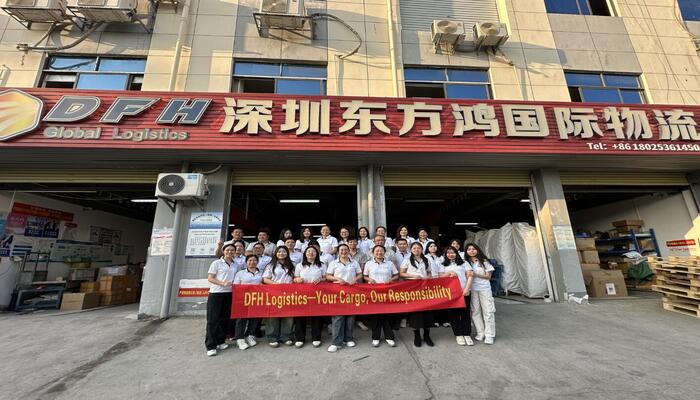
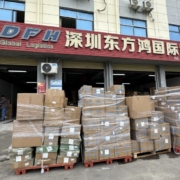
DFH Logistics has served more than 10,000 clients shipping from China to Singapore by air and sea. With over 13 years experience in international logistics, we can always offer you with customized solution and best price, whether you are the importer, distributor, e-commerce seller, retailer or manufacturer.
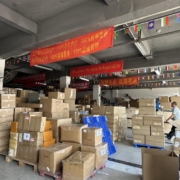
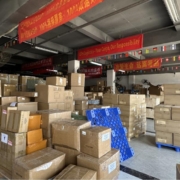
Our services include pickup, consolidation, warehousing, inspection, relabel and repacking, insurance, custom clearance and door to door shipping service. Contact us now to get a free quotation and consultation with air and sea freight cost comparison for your reference.