
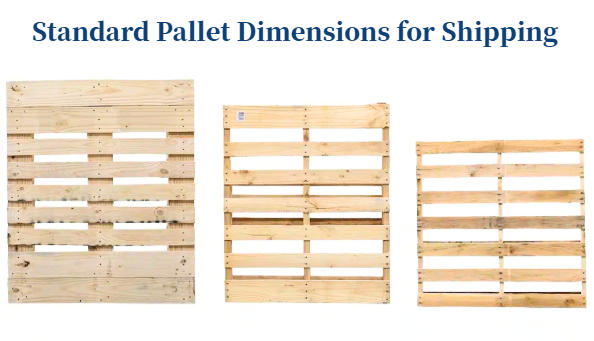
The Complete Guide to Standard Pallet Dimensions for Shipping
In global logistics, Standard Pallet Dimensions play a key role in how efficiently your goods move across warehouses, containers, and borders. If your pallet does not match regional standards, you may face repalletizing fees, handling delays, or lower container utilization.
This guide will help you understand everything about pallet sizes, types, and global standards so you can make smarter shipping decisions.
What Is a Pallet in Shipping Terms?
A pallet in shipping terms is a flat transport base used to stack, store, and move goods efficiently. In global logistics, you use pallets to make cargo easier to handle with forklifts, trucks, and containers.
You can think of a pallet as the “foundation” of warehouse shipping. Instead of moving single boxes, you place them on a pallet and move them as one unit. This saves time and reduces handling damage.
What Are Standard Pallet Dimensions?
Standard Pallet Dimensions refer to the most commonly accepted pallet sizes used across different regions and transport systems.
In logistics, not all pallets are the same size, but most follow agreed industry formats. These sizes are designed to fit shipping containers, warehouse racks, and transport vehicles as efficiently as possible. In simple terms, pallets are the tool, but Standard Pallet Dimensions are the rule.
What Types of Pallets Are Used in Logistics?
Different pallet types are used in logistics depending on cargo weight, cost, and shipping method. In global shipping, pallet choice directly affects safety and cost efficiency. So when you plan freight, you usually match pallet type first, then confirm standard pallet dimensions later.
Let’s look at the most common pallet types used in global logistics.
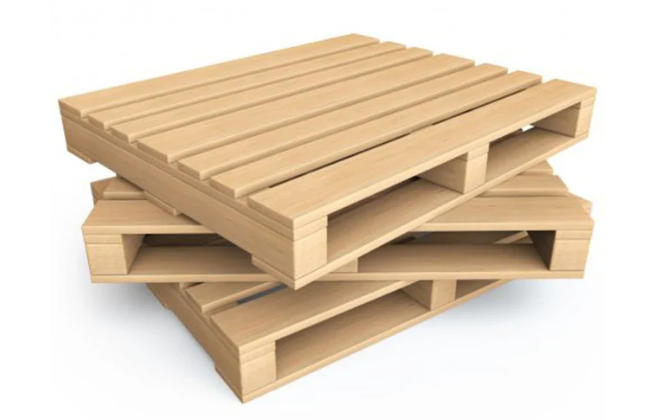
1. Wooden pallets
Wooden pallets are the default choice in most global shipments. They are strong, widely available, and easy to repair, which makes them ideal for everyday freight. If you are shipping general goods, furniture, or industrial products, this is usually your first option.
They are also the most compatible with Standard Pallet Dimensions, which is why they dominate international trade.
Best for: general cargo, export shipments, heavy goods, mixed supply chains
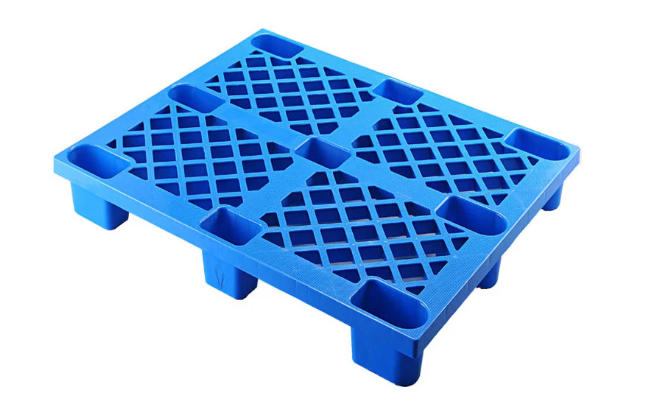
2. Plastic pallets
Plastic pallets are designed for clean, stable, and repeat-use logistics. They do not absorb moisture and are easy to wash, so they are often used in controlled environments where hygiene matters.
Best for: food, beverages, pharmaceuticals, retail distribution
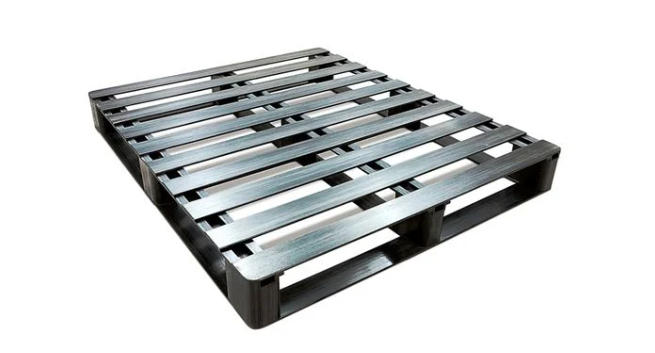
3. Metal pallets
Metal pallets are built for extreme durability and heavy industrial loads. They are less common in general trade because of their weight and cost, but they perform well in tough environments where other pallets may fail.
Best for: automotive parts, machinery, heavy equipment, high-value industrial cargo
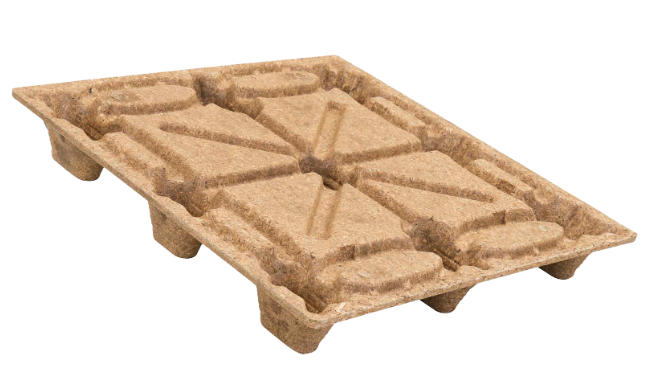
4. Pressed wood pallets
Pressed wood pallets are a cost-efficient solution for one-way or export-focused shipments. They are lighter than solid wood and help reduce shipping weight, but they are not designed for long-term reuse.
Best for: one-time exports, budget-sensitive shipments, air or sea freight optimization
Standard Pallet Sizes by Region (Complete Breakdown)
Different countries use different shipping systems, so Standard Pallet Dimensions change depending on where you ship your goods. You must pick the right size for your destination market to avoid painful extra costs at customs warehouses.
To better understand these differences, the following is a breakdown of the most commonly used standard pallet sizes by region:
Europe (EUR / Euro Pallet System)
| Pallet Type / Code | Dimensions in Inches | Dimensions in mm | Best Used For |
|---|---|---|---|
| EUR 1 (Standard) | 47.24 × 31.50 in | 1200 × 800 mm | Most everyday shop items and retail goods |
| EUR 2 (Industrial) | 47.24 × 39.37 in | 1200 × 1000 mm | Heavy factory loads and cargo going to the UK |
| EUR 3 | 39.37 × 47.24 in | 1000 × 1200 mm | Special factory parts with a turned deck layout |
| EUR 6 (Half Pallet) | 31.50 × 23.62 in | 800 × 600 mm | Small shop floor displays and quick supermarket delivery |
North America (US & Canada)
| Pallet Industry Standard | Dimensions in Inches | Dimensions in mm | Most Common Industry Use |
|---|---|---|---|
| GMA Standard Pallet | 48 × 40 in | 1219 × 1016 mm | Grocery items and over 30% of all US freight |
| Square Pallet | 42 × 42 in | 1067 × 1067 mm | Paint tins, chemical products, and large fluid drums |
| Beverage Pallet | 36 × 36 in | 914 × 914 mm | Soft drinks, beers, and heavy liquid crates |
| Dairy Pallet | 40 × 40 in | 1016 × 1016 mm | Milk crates and daily grocery store distribution |
| Automotive Pallet | 48 × 45 in | 1219 × 1143 mm | Car parts and heavy machinery pieces |
Asia (China, Japan & Southeast Asia)
| Pallet Industry Standard | Dimensions in Inches | Dimensions in mm | Most Common Industry Use |
|---|---|---|---|
| T-12 Standard | 47.24 × 39.37 in | 1200 × 1000 mm | Heavily used in China and Southeast Asia for global trade |
| T-11 Standard | 43.30 × 43.30 in | 1100 × 1100 mm | The main standard choice for local transport in Japan and Korea |
Australia & New Zealand (The Unique Standards)
| Oceanian Standard | Dimensions in Inches | Dimensions in mm | Logistics Purpose |
|---|---|---|---|
| Australian Standard | 45.86 × 45.86 in | 1165 × 1165 mm | Fits like a glove inside Australian railway cars |
| New Zealand Standard | 47.24 × 39.37 in | 1200 × 1000 mm | Matches up with common international sea containers |
ISO 6780 Standard: The Global Pallet Size System
The International Organization for Standardization came up with the ISO 6780 standard, which spotlights six universal sizes to keep cargo moving across borders without a hitch.
These six standards adopted the most popular local choices from around the world. Sticking to this list means local forklifts anywhere in the world can pick up your goods without any trouble.
| ISO Type Code | Dimensions in Inches | Dimensions in mm | Primary Global Region of Use |
|---|---|---|---|
| ISO 1 | 47.24 × 39.37 in | 1200 × 1000 mm | Europe, Asia, and massive global shipping routes |
| ISO 2 | 47.24 × 31.50 in | 1200 × 800 mm | Mainland Europe warehouse networks |
| ISO 3 | 44.88 × 44.88 in | 1140 × 1140 mm | Square freight and general chemical transport |
| ISO 4 | 43.30 × 43.30 in | 1100 × 1100 mm | Asian hubs like Japan, Korea, and China |
| ISO 5 | 48.00 × 40.00 in | 1219 × 1016 mm | North American market (GMA style) |
| ISO 6 | 42.00 × 42.00 in | 1067 × 1067 mm | US, European, and Asian industrial zones |
All pallet sizes and regional standards above are for reference only. The requirements may change based on carrier policies and logistics regulations.
If you are unsure which pallet size is suitable for your goods, you can contact us directly, and we will provide tailored logistics advice based on your specific needs.
Custom Pallet Sizes for Special Cargo Requirements
In real logistics, you may face products like oversized machinery parts, long industrial components, or unstable-shaped goods that cannot be safely packed on EUR, GMA, or ISO standard pallets. In these cases, using a customized pallet helps improve stability, reduce damage risk, and maximize container space usage.
If you are dealing with special cargo or unsure whether your goods require standard or custom pallet dimensions, you can work with an experienced freight forwarder such as DFH Freight to help you choose the right solution and avoid costly loading mistakes.
At DFH Freight, we can help you design the right solution based on your cargo type, container space, and destination requirements, ensuring your shipment is both safe and cost-efficient.
Packaging Service Advantages at DFH Freight :
- Custom Pallet Design & Load Optimization
- ISPM 15 Certified Wooden Crate Packaging
- Reinforced & Shockproof Packaging Solutions
- Repackaging & Cargo Consolidation Services
- Export Standard Packaging Solutions
- Heavy & Oversized Cargo Crating
- Labeling Services
Real-world Examples
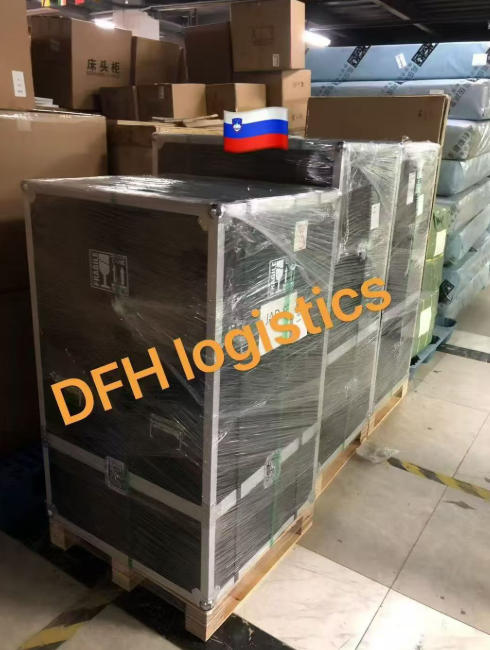
- Custom Pallet and Reinforced Packaging Services:
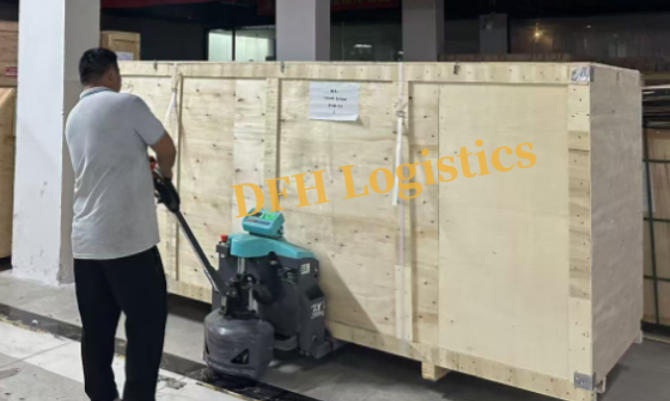
- Custom Wooden Crates and Custom Pallets :
- Custom Irregular Cargo Crating & Pallet Services:
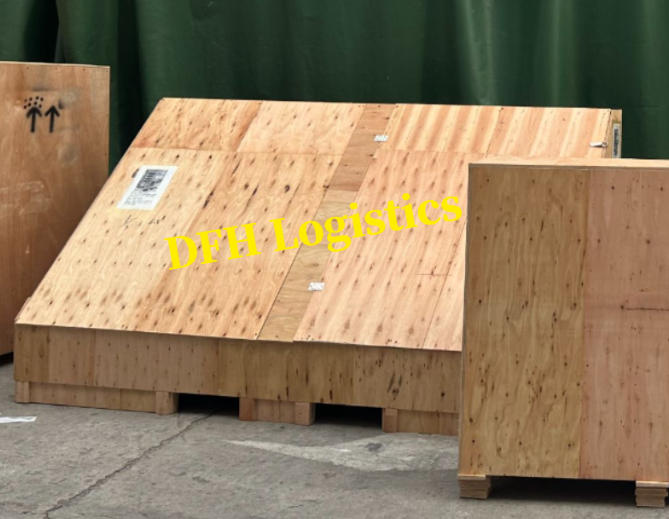
- Repacking and Customized Pallet Solutions:
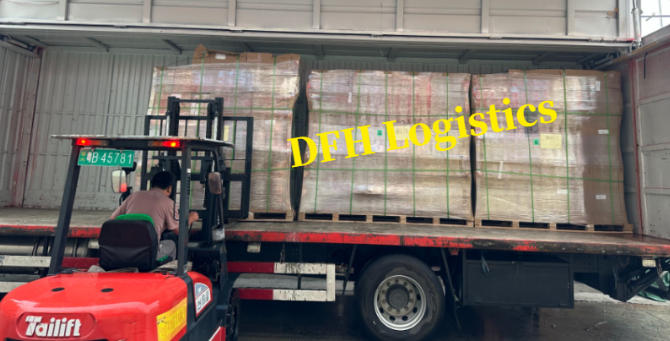
Compared with standard pallets, custom-made pallets give you more flexibility to improve load stability, reduce wasted space, and protect goods during international shipping.
DFH Freight provides comprehensive packaging solutions for all types of goods, ensuring every shipment is perfectly prepared for international transport. If you require any assistance, please feel free to contact us. We will tailor a packaging solution to your specific needs.
Why Do Pallet Dimensions Matter in Global Shipping?
Pallet Dimensions control space, cost, and handling efficiency across the supply chain. Even small size differences can create real operational and cost issues when moving goods internationally. Standard Pallet Dimensions help avoid these problems.
Key reasons pallet dimensions matter
- Container efficiency & cost control: pallets help you fit more goods into one container, improving loading efficiency and also can make cost per unit lower. Improperly sized pallets can cause gaps, which can increase the total shipping cost even without increasing the quantity of goods.
- Warehouse handling speed: Standard sizes fit forklifts, racks, and automation systems. Non-standard pallets slow down loading and unloading.
- Cross-border compatibility: Matching Standard Pallet Dimensions can reduce repalletizing at customs or warehouses.
- Damage reduction: Stable stacking reduces movement during transport. Correct dimensions can keep goods safer in long-distance shipping.
In real logistics planning, Standard Pallet Dimensions are always checked before booking transport. It is one of the simplest ways to avoid hidden costs in international shipping.
Common Mistakes When Using Pallets in Logistics
Most pallet problems in logistics are not caused by complex issues, but by a few simple mistakes that are often ignored during packing and planning. These mistakes usually look small at the beginning, but they can lead to serious problems.
That is why it is important to understand the most common pallet handling errors before shipping.
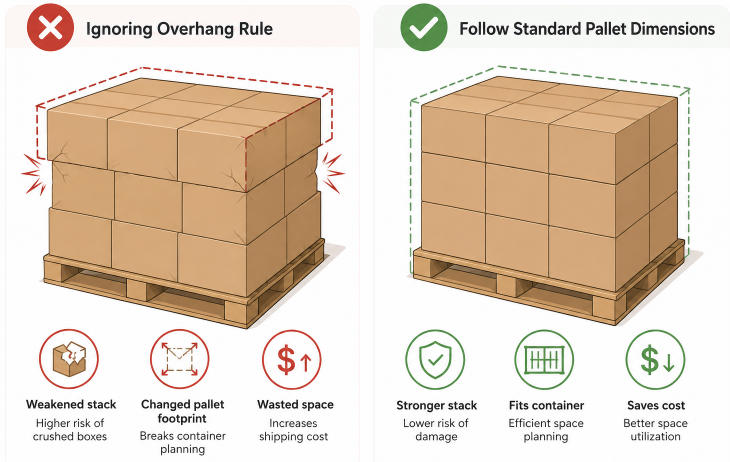
1. Ignoring the overhang rule
You should never let cartons hang over the edge of standard pallet dimensions. Even a small overhang weakens the stack and increases the risk of crushed boxes during transport.
It also changes the pallet footprint. In practice, this can break container planning and waste space, which quietly increases your shipping cost.
2. Using untreated wooden pallets
You must not skip ISPM 15 treatment when using wooden pallets for export. Without the heat treatment stamp, customs can delay or reject your shipment.
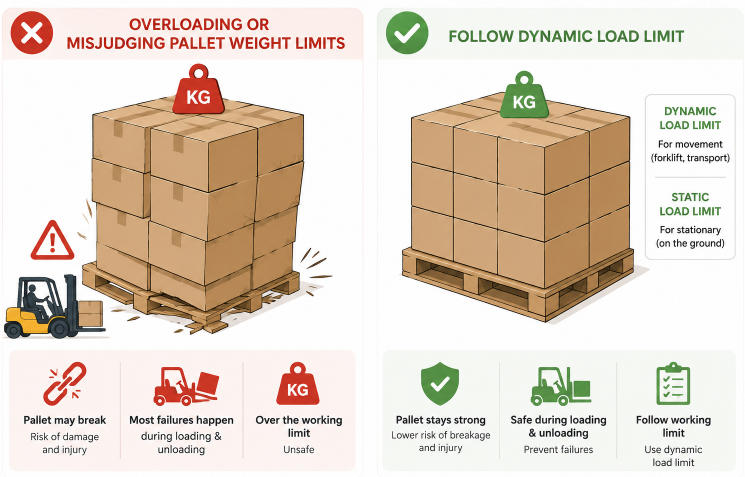
3. Overloading or Misjudging Pallet Weight Limits
A pallet may look strong, but it can still break if it is overloaded or used beyond its working limit during transport or forklift handling. In real logistics, you should always follow the dynamic load limit instead of the static one, since most pallet failures happen during loading and unloading.
Note: Static load is the maximum weight a pallet can safely hold when it is stationary on the ground. It does not involve movement or handling. Dynamic load is the maximum weight a pallet can safely carry when it is being moved, such as by a forklift or pallet jack. This is usually lower than the static load.
4. Using non-standard pallet sizes
You should avoid random or non-standard pallet sizes just to save cost upfront. They often don’t fit warehouse systems or container layouts at the destination.
FAQ About Standard Pallet Dimensions
1. What Is A Gaylord Box?
A Gaylord box is a large corrugated cardboard container used for bulk shipping and storage.
It is usually placed on a pallet to move loose or packaged goods in large volumes. Unlike normal cartons, Gaylord boxes are designed for industrial use and can handle heavy or mixed items such as recyclables, food materials, or warehouse stock.
2. What Is ISPM 15 In Pallet Shipping?
ISPM 15 is an international standard for treating wooden packaging used in global trade. It requires heat treatment or fumigation to eliminate pests before export. If wooden pallets are not ISPM 15 certified, customs may delay, fine, or reject the shipment.
3. What Are CHEP Pallets?
CHEP pallets are blue pallets managed by CHEP, a global pallet pooling company. Instead of buying pallets, you can rent them and return them after use.
4. What Is The Difference Between Stringer And Block Pallets?
Stringer pallets use long wooden boards to support the load and are more common for standard shipments. They are cost-effective but usually have limited forklift entry points. Block pallets use wooden blocks instead of stringers, allowing four-way forklift access. They are stronger, more durable, and better for heavy or international shipping.
5. What Does “Palletized CBM” Mean?
Palletized CBM refers to the total volume of cargo when goods are stacked on pallets. It includes both the product and pallet space used inside the container. This measurement is important because freight cost is often calculated based on volume, not just weight.
6. How Do I Calculate Palletized CBM?
You can calculate palletized CBM by multiplying pallet length × width × height (in meters). In most cases, shippers provide product dimensions, and the freight forwarders double-check the final CBM and convert it into chargeable volume for shipping quotes. If you need help calculating palletized CBM or estimating shipping costs, you can contact us and we will provide accurate calculations and a freight cost estimate based on your shipment details.
7. How High Can I Safely Stack Boxes On A Standard Pallet?
There is no fixed standard because different products handle pressure differently. Safe stacking height depends on pallet strength, cargo type, and box durability. You should always ensure lower layers can support the full load, especially during transport and container stacking.
Final Thoughts
When you match your export packaging with the right Standard Pallet Dimensions such as the US GMA standard, the European EUR system, or the global ISO 6780 network, you can protect both your cargo and your shipping costs.
If you are unsure which standard pallet dimensions fit your container load, or if your cargo requires non standard or custom pallet sizes, you do not need to figure it out alone. Send us your cargo details today. Our friendly freight experts will give you a tailored packing plan and a transparent shipping quote.

